Print
Print
 Create flyer
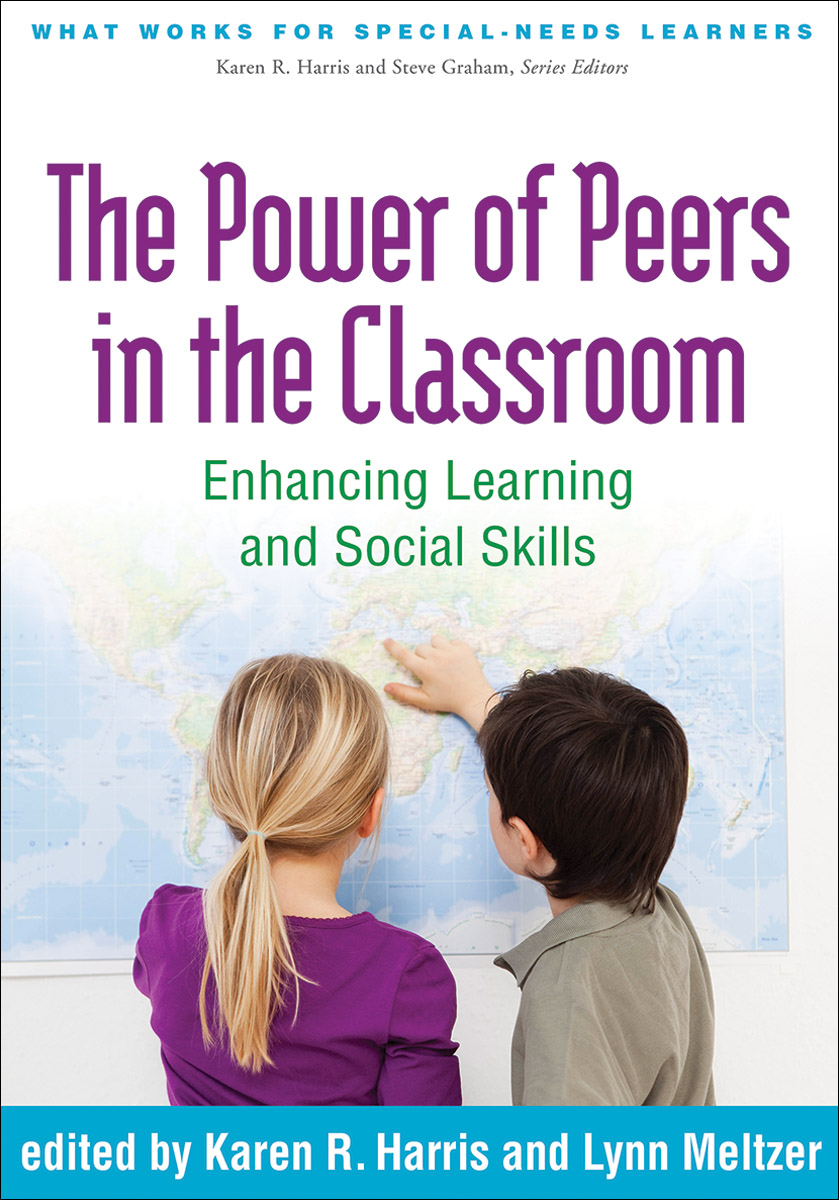
The Power of Peers in the Classroom
Enhancing Learning and Social Skills
Edited by Karen R. Harris and Lynn Meltzer
HardcoverPaperbacke-bookprint + e-book
Hardcover
orderJuly 6, 2015
ISBN 9781462521074
Price: $65.00 322 Pages
Size: 8" x 10½"
Paperback
orderJuly 7, 2015
ISBN 9781462521067
Price: $43.00322 Pages
Size: 8" x 10½"
 Request a free digital professor copy on VitalSource ?
The reproducible materials can be downloaded and printed in PDF format.
Karen R. Harris, EdD, is Regents Professor Emeritus and the former Mary Emily Warner Endowed Professor of Education at Arizona State University, and a former general and special education teacher. Her research focuses on theoretically based interventions for the development of academic and self-regulation abilities among at-risk students and those with disabilities, as well as effective models of inservice teacher preparation for writing instruction for all students. She developed the Self-Regulated Strategy Development model of strategies instruction. The former editor of the Journal of Educational Psychology, Dr. Harris is coauthor or coeditor of several books and over 200 peer-reviewed publications. She is a recipient of the Distinguished Researcher Award for special education research from the American Educational Research Association and the Career Research Award from the International Council for Exceptional Children. She is President of Division 15 (Educational Psychology) of the American Psychological Association and has served as President of the Division for Research of the Council for Exceptional Children.
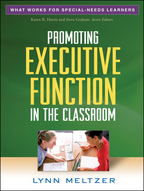
Lynn Meltzer, PhD, is President and Co-Founder of the Research Institute for Learning and Development (ResearchILD) in Lexington, Massachusetts. Since the 1980s, her clinical work, research, publications, and presentations have focused on understanding the complexity of learning and attention differences. Dr. Meltzer is founder and Program Chair of the annual Executive Function and Learning Differences Conference, which she established in 1984. A Fellow and past president of the International Academy for Research in Learning Disabilities, she served for 30 years as an Associate in Education at the Harvard Graduate School of Education and Adjunct Associate Professor in the Department of Child Development at Tufts University. Dr. Meltzer has been an invited speaker at numerous national and international conferences, and has received many awards, including the Outstanding Researcher Award from the Council for Learning Disabilities and the Innovative Program of the Year Award from Children and Adults with Attention-Deficit/Hyperactivity Disorder (CHADD). Together with her ResearchILD colleagues, she has developed SMARTS, an evidence-based executive function curriculum for elementary, middle, and high school students that is used bv schools in 48 states across the United States and in 38 countries worldwide (www.smarts-ef.org).
Lynn Meltzer, PhD, is President and Co-Founder of the Research Institute for Learning and Development (ResearchILD) in Lexington, Massachusetts. Since the 1980s, her clinical work, research, publications, and presentations have focused on understanding the complexity of learning and attention differences. Dr. Meltzer is founder and Program Chair of the annual Executive Function and Learning Differences Conference, which she established in 1984. A Fellow and past president of the International Academy for Research in Learning Disabilities, she served for 30 years as an Associate in Education at the Harvard Graduate School of Education and Adjunct Associate Professor in the Department of Child Development at Tufts University. Dr. Meltzer has been an invited speaker at numerous national and international conferences, and has received many awards, including the Outstanding Researcher Award from the Council for Learning Disabilities and the Innovative Program of the Year Award from Children and Adults with Attention-Deficit/Hyperactivity Disorder (CHADD). Together with her ResearchILD colleagues, she has developed SMARTS, an evidence-based executive function curriculum for elementary, middle, and high school students that is used bv schools in 48 states across the United States and in 38 countries worldwide (www.smarts-ef.org).